The Return of Moiré – Undulating Luxury in Contemporary Interiors
In interior design, much like in other artistic fields, certain forms, surfaces, and patterns return from time to time. They recall the elegance of an earlier style while at the same time acquiring a new character within a fresh, contemporary context.
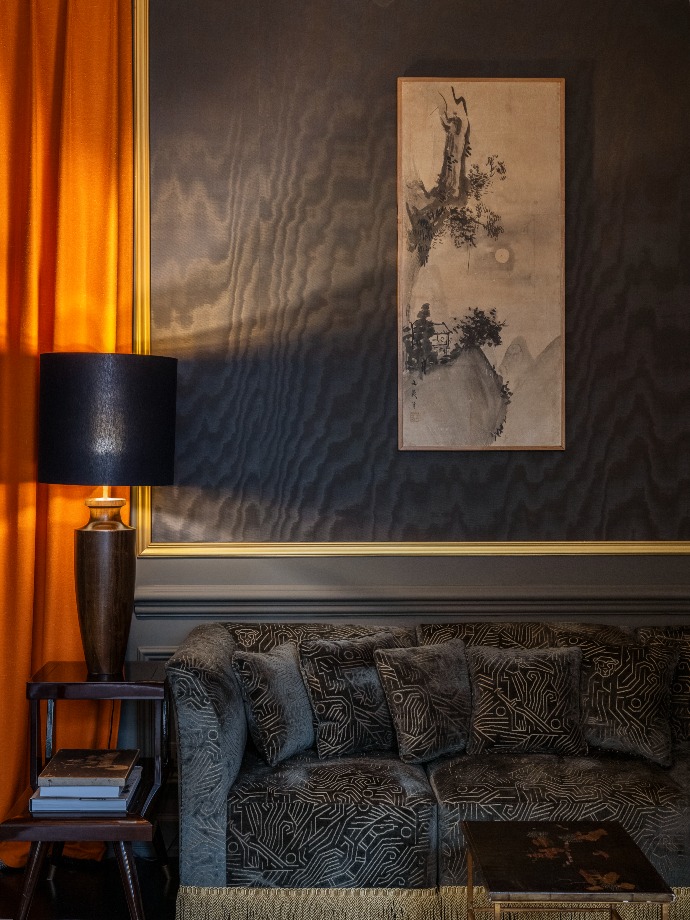
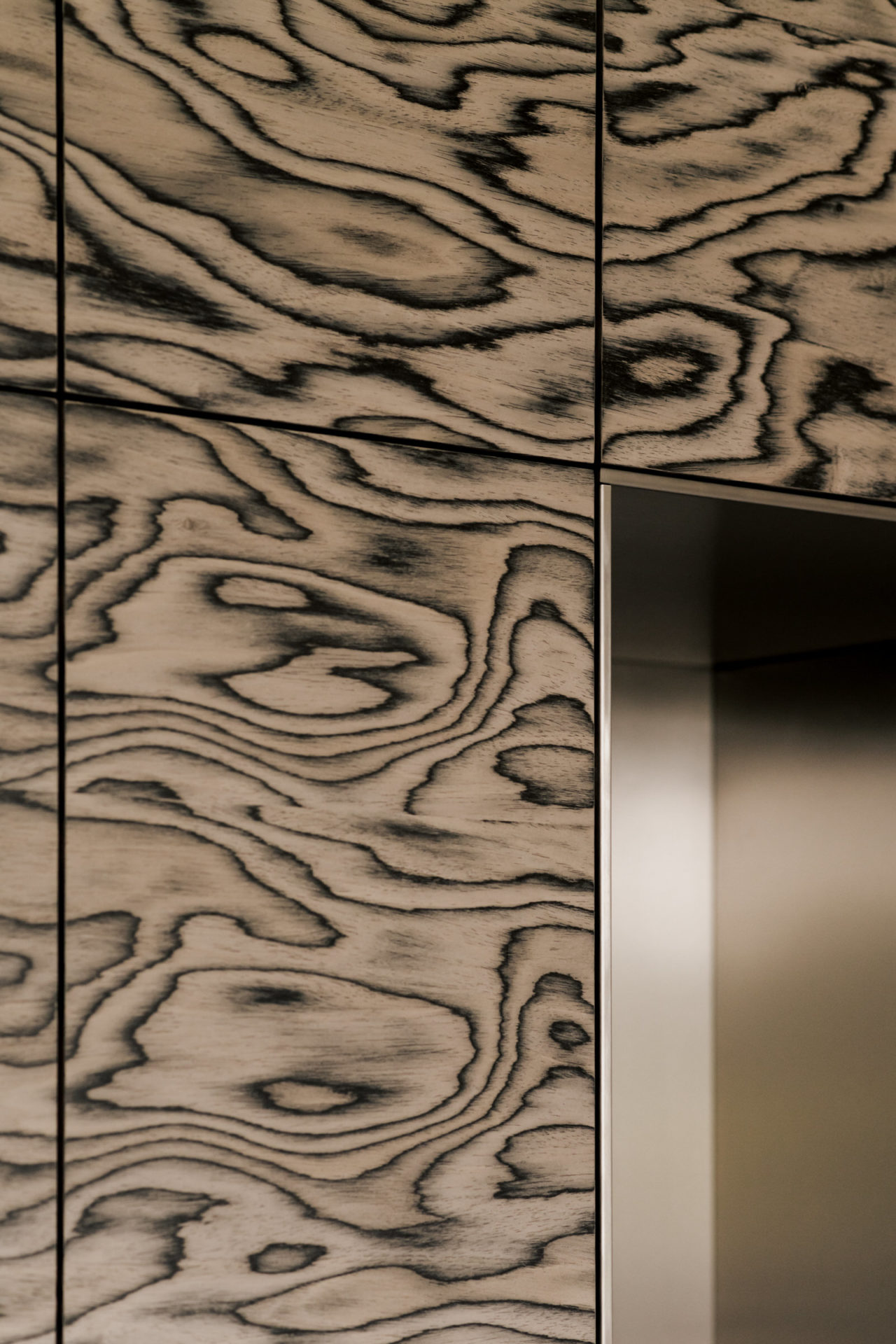
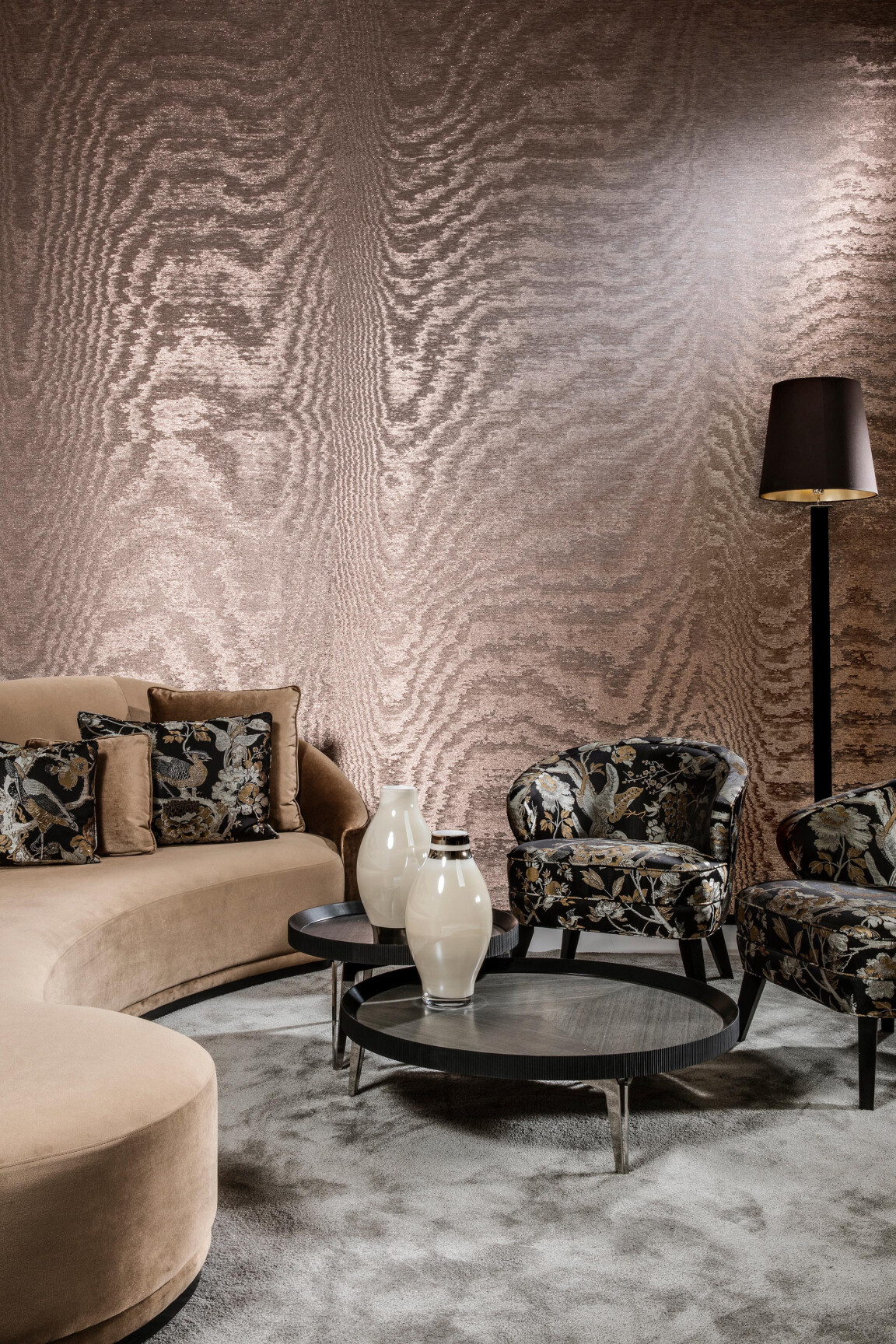
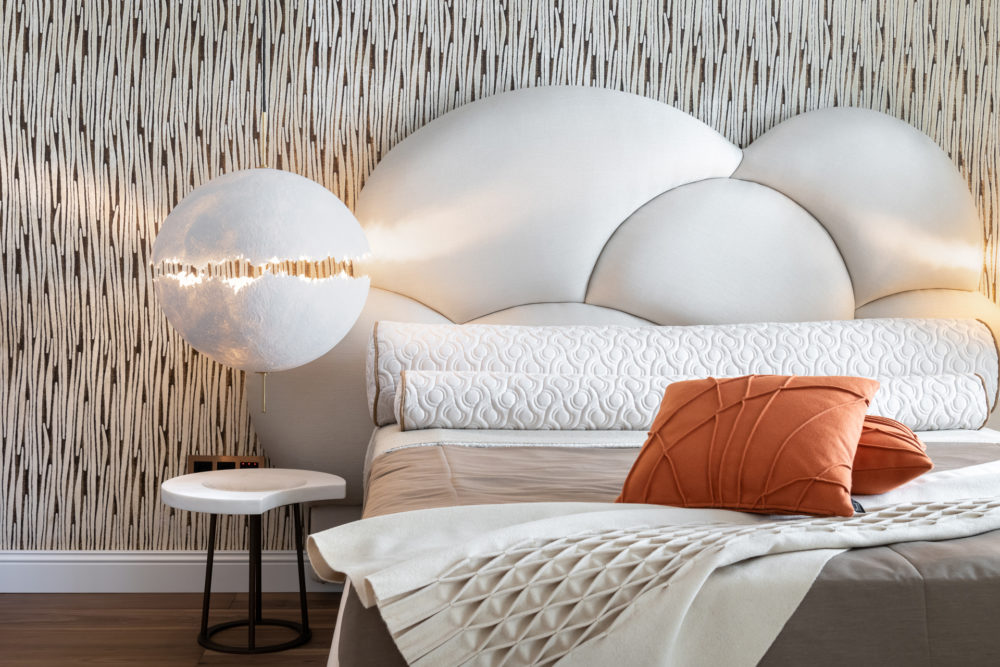
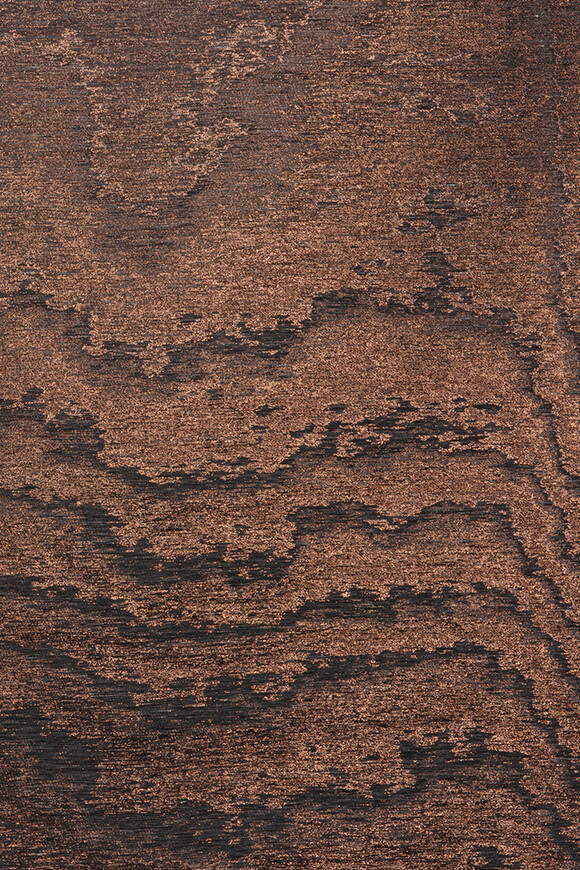
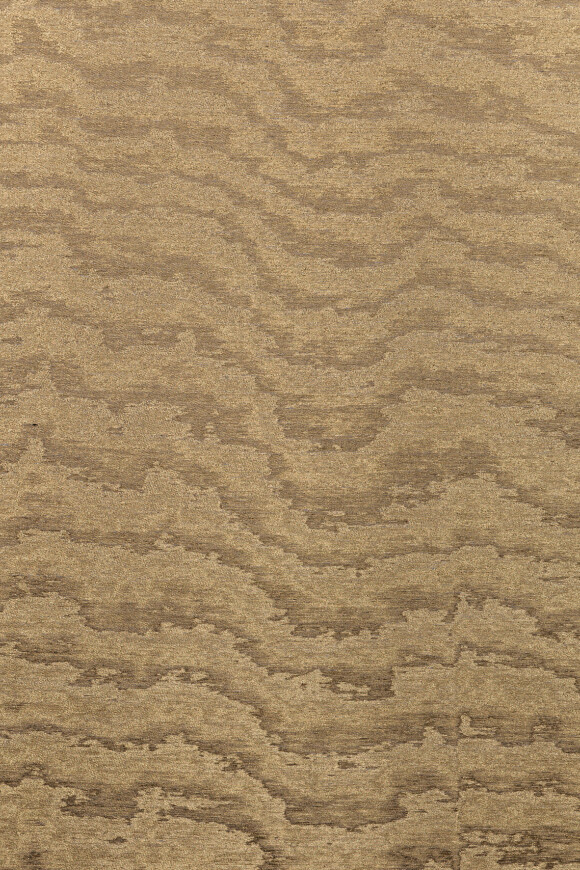
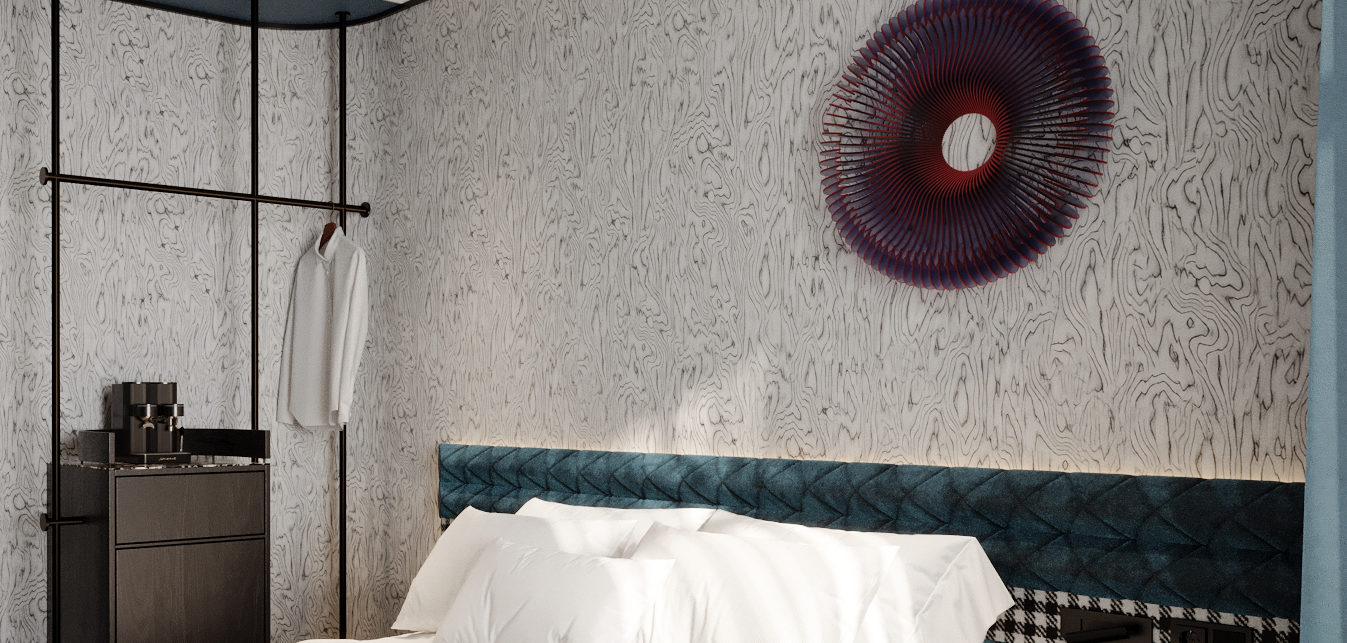
In recent years, an unusual, wave-like pattern has begun to appear in more and more interiors: moiré. Resembling the gentle rippling of water, this motif brings a distinctive sense of depth and movement to surfaces. It may also evoke the grain of wood, while in combination with colour it can create a vibrant, youthful energy. Because of its organic quality and visual richness, designers have rediscovered it and are increasingly drawn to its use.
Moiré originally refers to a textile technique that appeared in Europe as early as the 17th century. The word comes from the French moirer, referring to a watery, undulating surface. Traditionally, the pattern was created on silk: the damp fabric was pressed with high-pressure rollers so that the threads bent subtly in different directions, producing the characteristic effect.
For a long time, moiré silk was associated with luxury and representation. It appeared in royal courts, palaces, and elegant interiors, typically on wall coverings, draperies, and upholstery. This kind of shimmering luxury fitted perfectly into the richness and theatricality of the Baroque.
What makes moiré especially fascinating is that it is not only a textile pattern but also an optical phenomenon. When two similar structures are layered with a slight offset, a wavelike interference pattern emerges. This optical effect is what gives the surface its vibrating, almost moving quality.
As Elle Decor notes in its article on moiré, designers are returning to this pattern today primarily because it introduces a distinctive texture and a subtle play of light into a space.
Moiré in Contemporary Interiors
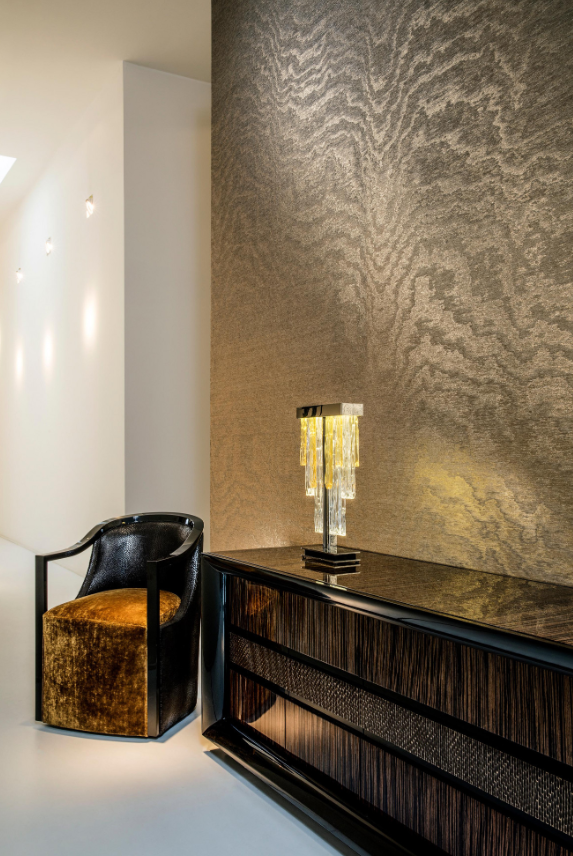
Today, moiré appears not only in textiles. It is increasingly found in wallpapers, decorative panels, and wall coverings as well. A number of international manufacturers — including Dedar, Élitis, Lelièvre Paris, Arte, and Texam — have incorporated the pattern into their current collections.
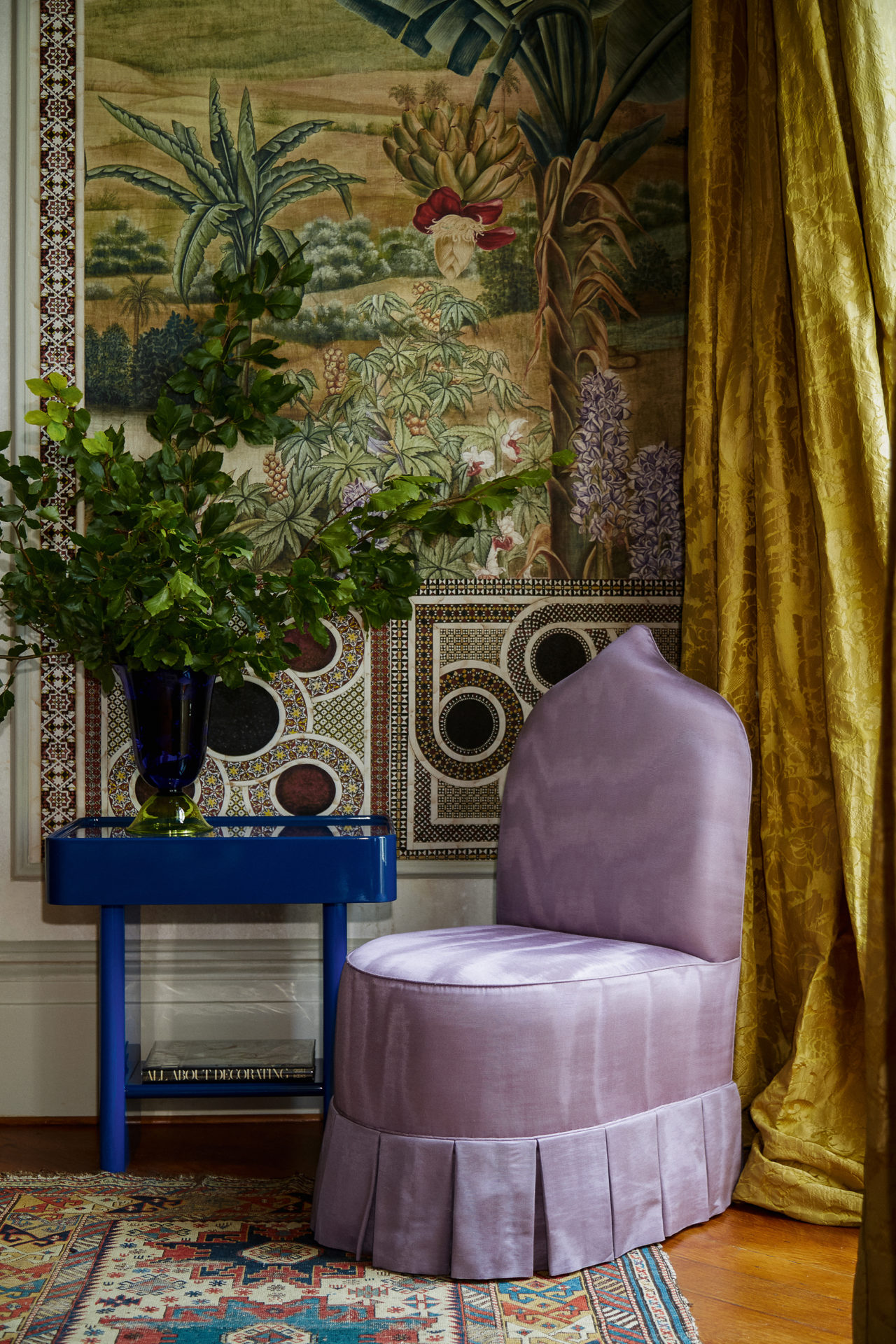
In contemporary interiors, moiré often appears in restrained shades such as sand, off-white, deep grey, or darker tones, which makes it feel both elegant and modern. At the same time, its more vibrant, colourful versions also find their place in bolder interiors with a retro spirit, where the pattern fits just as naturally.
An Old Technique, A New Source of Inspiration
Moiré is a striking example of how a centuries-old technique can return to contemporary design. Its undulating surface feels both classic and modern at once — and perhaps that is exactly why it has once again become such an exciting source of inspiration in interior architecture.