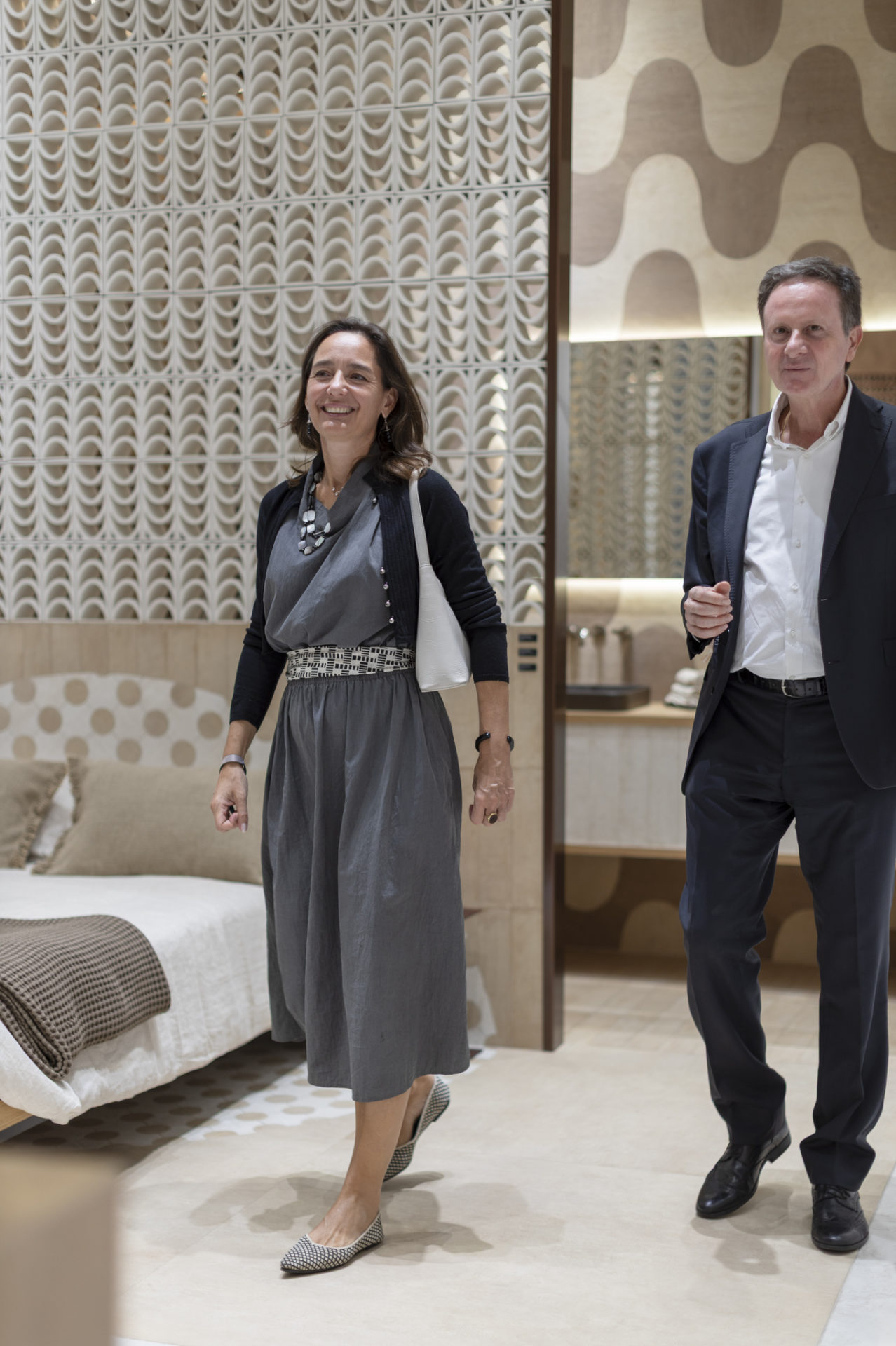
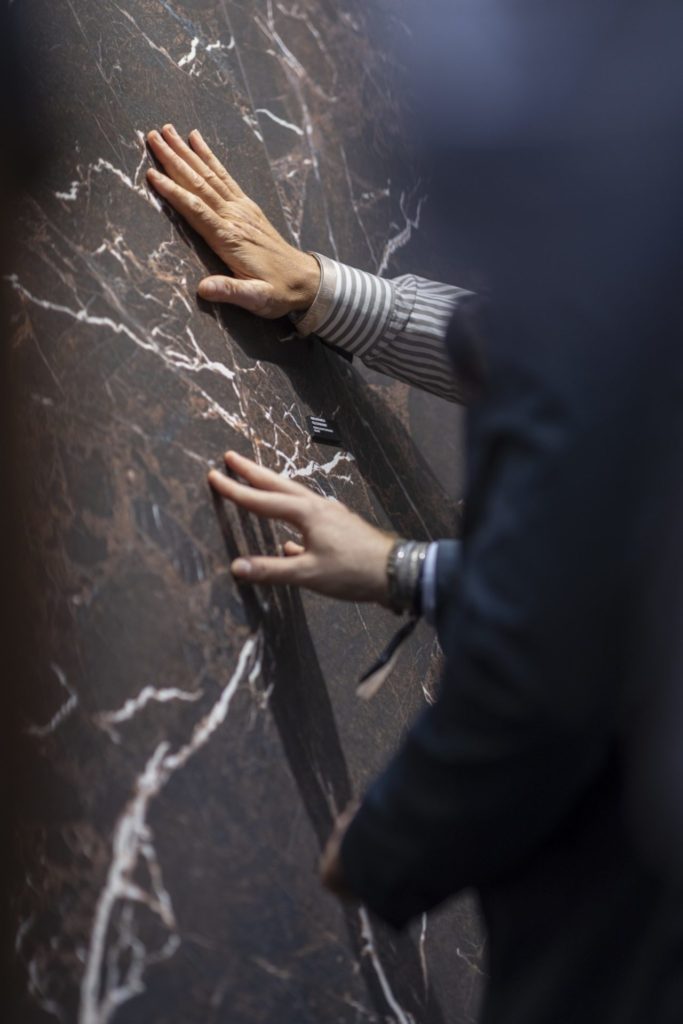
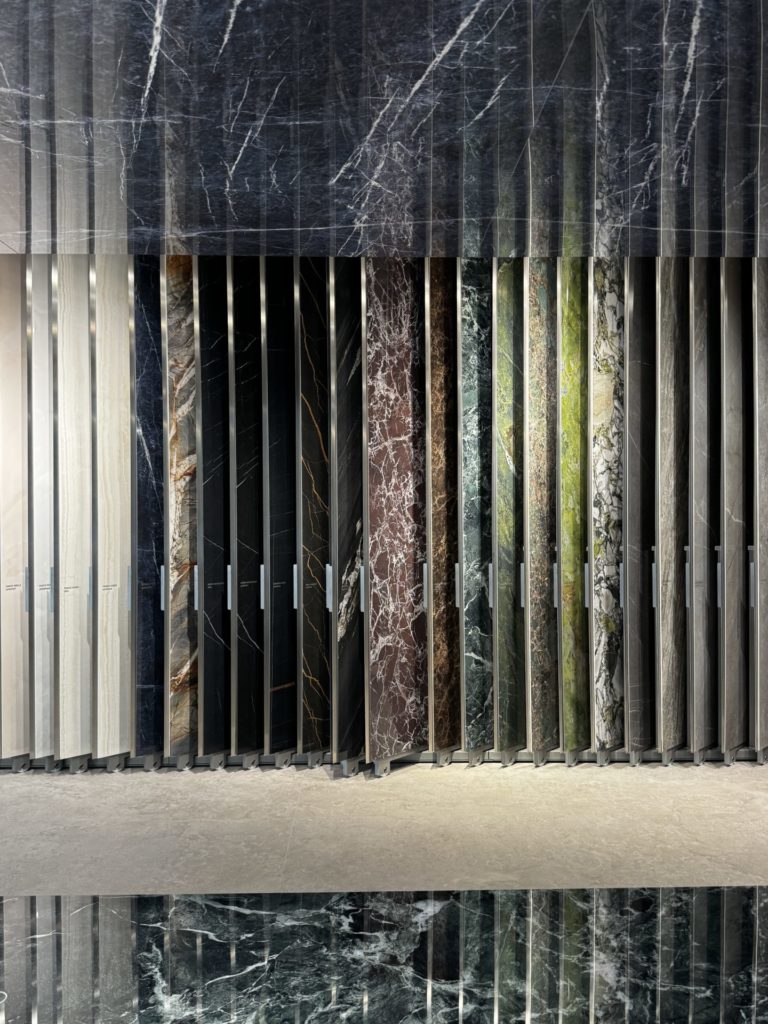
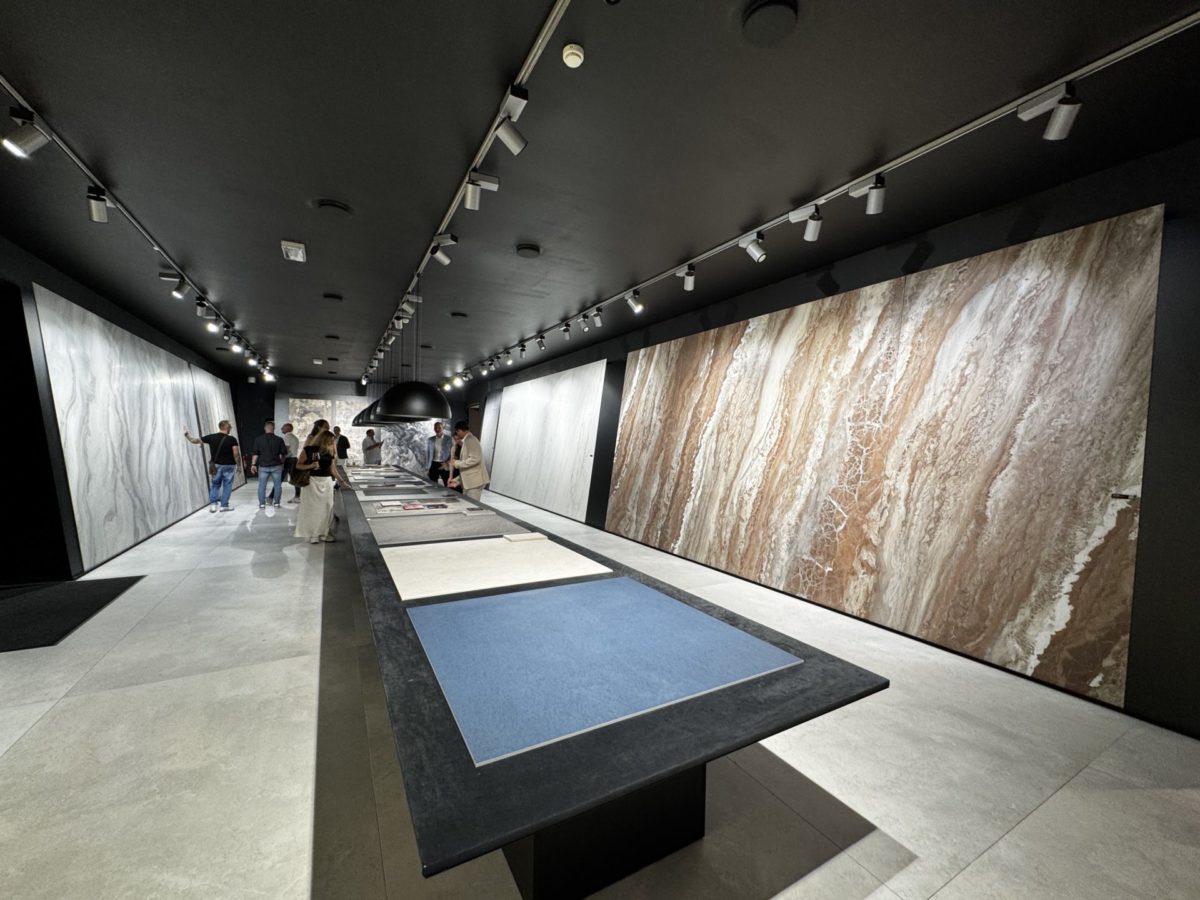
As designers, Cersaie is always about more than just new collections, surfaces, and technologies for our team. We’re also interested in what lies behind them: how a manufacturer thinks about materials, possibilities, and the direction the industry is heading. One of the strongest impressions from this year’s Cersaie was precisely this: technology now makes almost anything possible. The size of large-format tiles, the diversity of surfaces and textures, and the freedom in cutting and finishing open up possibilities that, just a few years ago, were little more than ideas.
That is precisely why the most interesting question today is perhaps not what we can produce, but what we do with the freedom that technology affords us. And this is where design and the designer’s decisions truly come into their own.
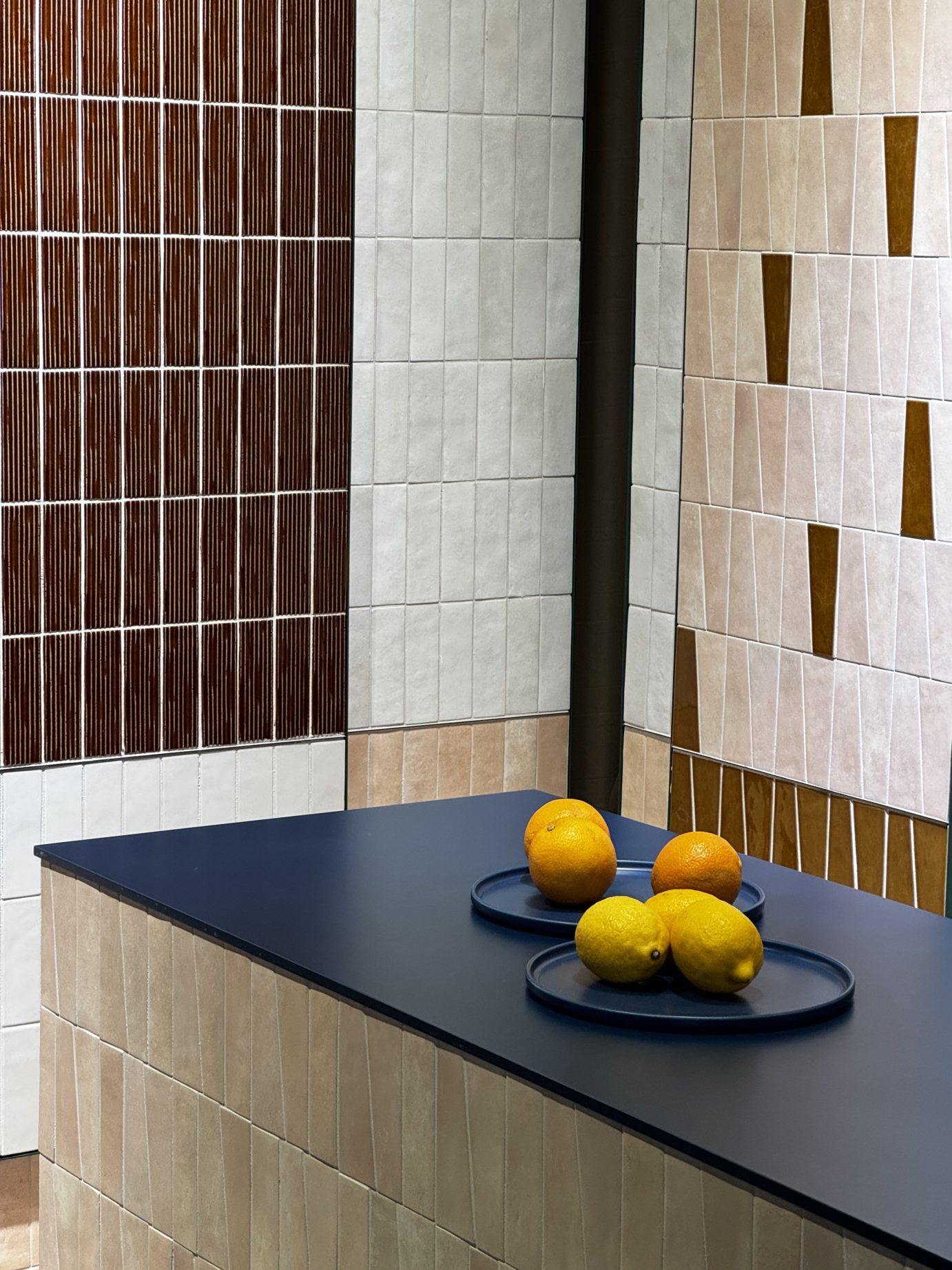
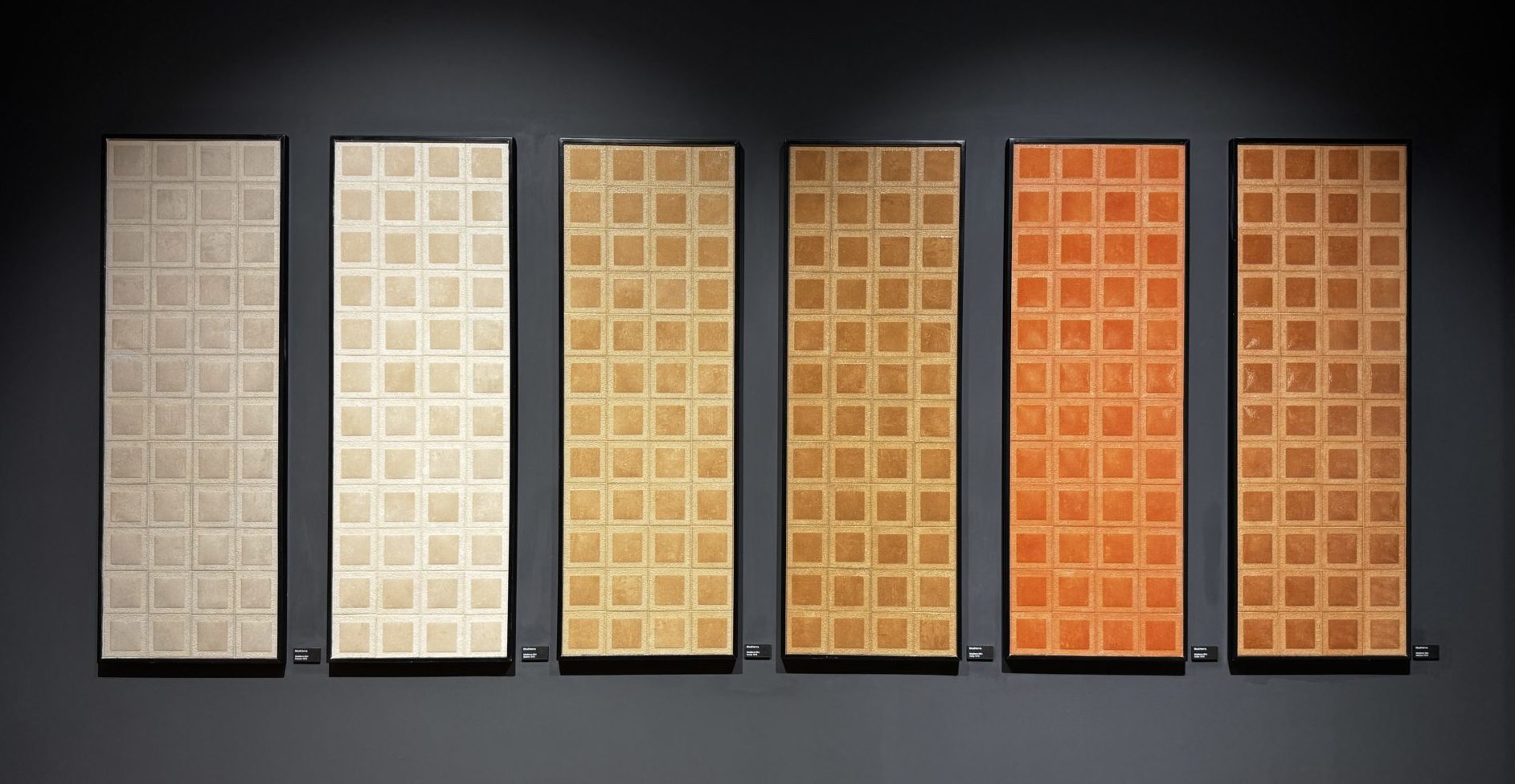
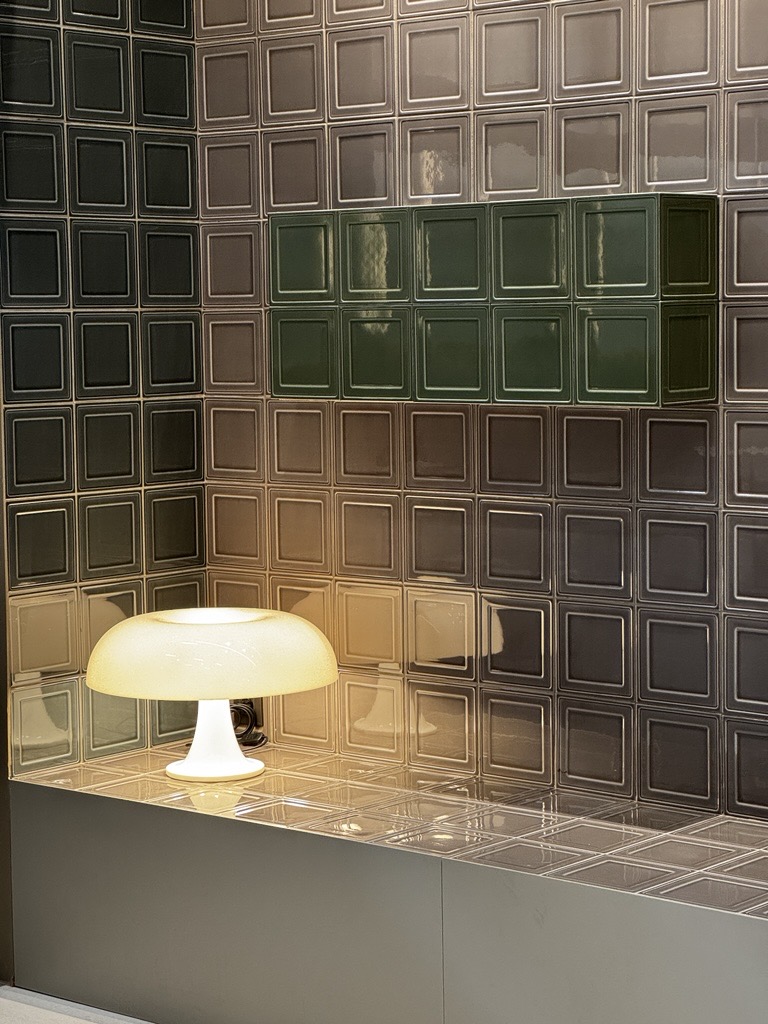
Alongside the former world of grays and beiges, warmer, more natural tones are emerging more strongly: browns, corals, sandy and yellowish shades, as well as various variations of Mediterranean terracotta. Meanwhile, the vibe of the ’70s and ’80s is making a very exciting comeback, not as a nostalgic replica, but reimagined with contemporary proportions, details, and technology. Perhaps even more interesting is the return of small formats.
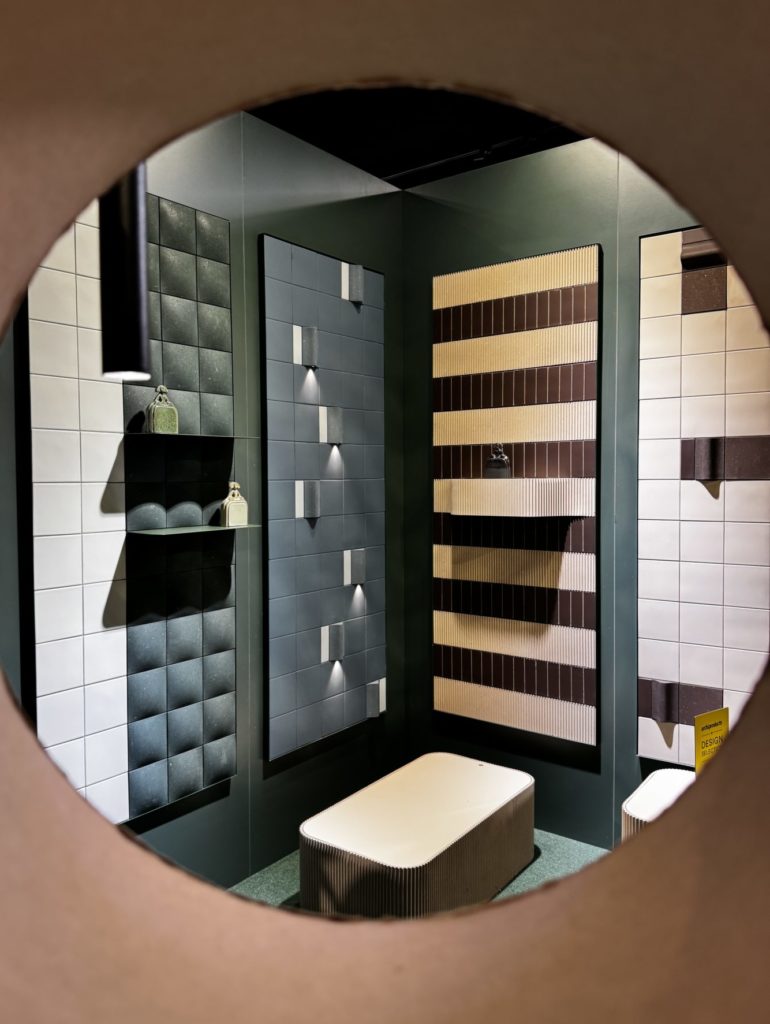
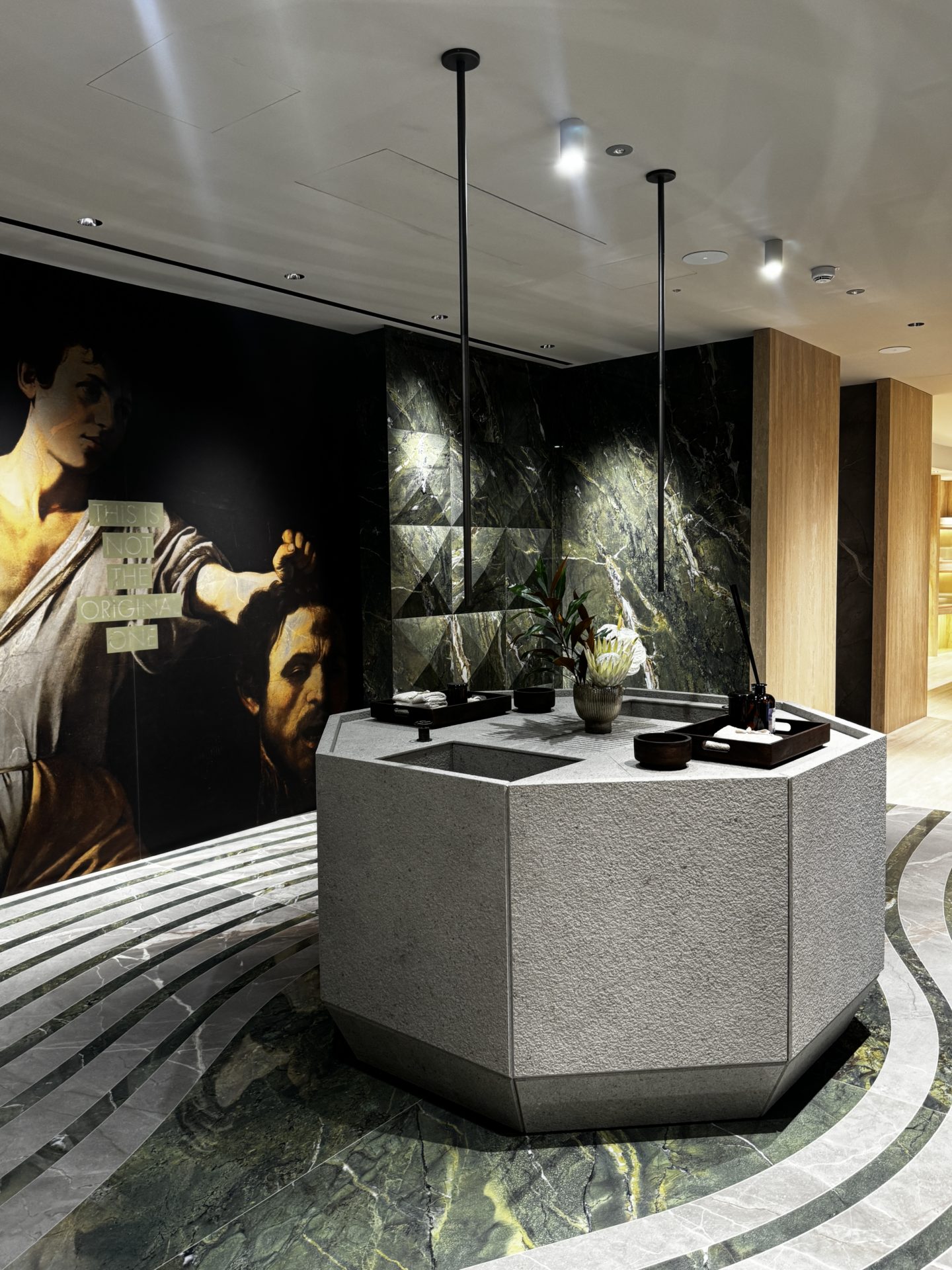
Alongside the precision and nearly perfect surfaces of large-format tiles, the handcrafted look, glazed surfaces, slight irregularities, and imperfections are regaining their value. The grout is no longer simply a necessary technical element, but an integral part of the composition. Rhythm, subtle variations, and the material’s own “signature” lend character to the space. As designers, it is also increasingly important to us that ceramics are gradually moving beyond their traditional role as wall and floor tiles. They can be used to create furniture, countertops, sinks, built-in details, or even an entire space-defining element. With advances in cutting, edge-forming, and machining technologies, large-format tiles now often behave more like a material that can be shaped with extreme precision than like a cladding material in the traditional sense.
For us designers, this is perhaps one of the most exciting directions: when the material is no longer simply “applied” to architecture, but becomes part of the architecture itself. A built-in sink clad in stoneware, for example, represents a completely different way of thinking than a freestanding sink. Form, material, detail, and space merge into a single, cohesive composition.
Meanwhile, for us, Cersaie is still not just about trends. The conversations with manufacturers, developers, and other designers are just as important. Getting to know the philosophy behind each brand, comparing the past with the present, and hearing how they envision the coming years often offers more insight than a new collection alone. It is through these encounters that we truly understand why a material is created, what idea brings a technology to life, and how we can use all of this in a truly meaningful way in our own projects. When technology makes almost anything possible, it is ultimately the designer’s decision that becomes truly important once again.
Tervezőként a Cersaie csapatunk számára mindig többről szól, mint új kollekciókról, felületekről és technológiákról. Érdekel minket az is, ami ezek mögött van: hogyan gondolkodik egy gyártó az anyagról, a lehetőségekről és arról, merre tart a szakma. Az idei Cersaie egyik legerősebb benyomása éppen ez volt: a technológia mára szinte mindent lehetővé tesz. A nagylapok mérete, a felületek és textúrák sokfélesége, a vágás és a megmunkálás szabadsága olyan lehetőségeket nyit meg, amelyek néhány éve még inkább csak elképzelések voltak.
Éppen ezért ma már talán nem az a legérdekesebb kérdés, hogy mit tudunk gyártani, hanem az, hogy mit kezdünk azzal a szabadsággal, amit a technológia ad. És itt kezd igazán fontossá válni a design – és a designer döntései.
A korábbi szürke-bézs világ mellett egyre erősebben jelennek meg a melegebb, természetesebb tónusok: barnák, korallok, homokos és sárgás árnyalatok, valamint a mediterrán terracotta különböző változatai. Közben nagyon izgalmasan tér vissza a hetvenes és nyolcvanas évek hangulata is – nem nosztalgikus másolatként, hanem mai arányokkal, részletekkel és technológiával újrafogalmazva. Talán még érdekesebb a kis formátumok visszatérése.
A nagylapok precizitása és szinte tökéletes felületei mellett újra értékké válik a kézműves hatás, a mázas felület, az enyhe szabálytalanság és a tökéletlenség. A fuga többé nem egyszerűen egy szükséges technikai elem, hanem a kompozíció része. A ritmus, az apró eltérések és az anyag saját „kézírása” karaktert adnak a térnek. Tervezőként számomunkra az is egyre fontosabb, hogy a kerámia fokozatosan kilép a klasszikus burkolat szerepéből. Bútor, pult, mosdó, beépített részlet vagy akár egy egész térformáló elem is készülhet belőle. A vágási, élképzési és megmunkálási technológiák fejlődésével a nagylap sok esetben már inkább egy rendkívül precízen alakítható anyagként viselkedik, mint hagyományos értelemben vett burkolatként.
Számunkra, tervezők számára talán ez az egyik legizgalmasabb irány: amikor az anyagot már nem egyszerűen „ráhelyezzük” az építészetre, hanem maga is az építészet részévé válik. Egy épített, kőporcelánnal burkolt mosdó például egészen más gondolkodást képvisel, mint egy önálló szaniter. A forma, az anyag, a részlet és a tér egyetlen, összefüggő kompozícióvá válik.
Mindeközben a Cersaie számunkra továbbra sem csak a trendekről szól. Legalább ennyit jelentenek a beszélgetések a gyártókkal, fejlesztőkkel és más tervezőkkel. Az, hogy megismerjük egy-egy márka mögött álló gondolkodást, összevessük a múltat a jelennel, és meghallgassuk, hogyan látják a következő éveket, sokszor többet ad, mint egy új kollekció önmagában. Ezekből a találkozásokból értjük meg igazán, miért születik egy anyag, milyen gondolat hív életre egy technológiát, és hogyan lehet mindezt a saját projektjeinkben valóban értelmesen használni. Amikor a technológia már szinte mindent lehetővé tesz, végül újra a tervezői döntés válik igazán fontossá.